

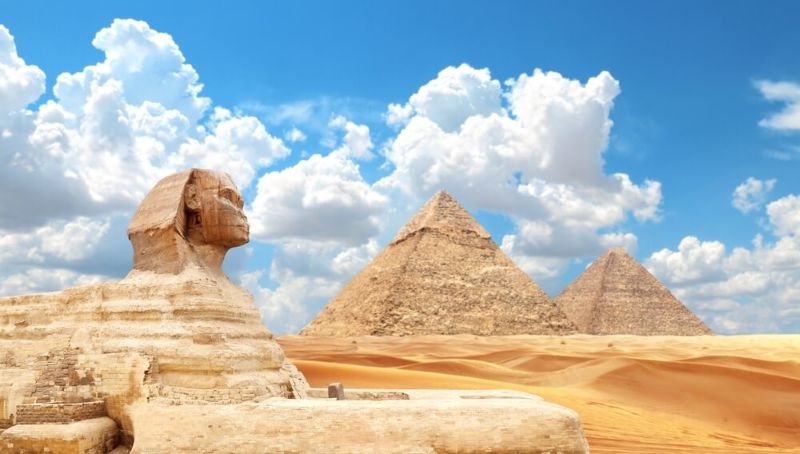
Egypt has a captivating history, filled with breathtaking art and architectural marvels dating back to the beginnings of human civilisation, such as the pyramids and temples carved into the mountains. Modern-day travellers to Egypt can take an incredible opportunity to step back in time and explore the foundations of human history at any of Egypt's historical sites.
For those interested in experiencing high culture through tourism, there are many different ways to do so in Egypt, including intellectually stimulating and visually impressive experiences.
Egypt is one of the largest centres of historical density on the planet, combining luxury travel with rich, engaging stories at each site. It is easy to see how much technical innovation and faith have gone into the construction of monuments in Egypt. Thus, travelling to Egypt to learn its history is a rich journey for the curious traveller searching for a true cultural experience.
Globally, Egypt is at the centre of world heritage tourism, thanks in part to its acclaimed and globally recognised building sites. However, its tourist appeal extends far beyond simply visiting these famous sites, which is why Egypt is considered one of the core countries supporting cultural tourism worldwide.
Over time, the presence of Ancient Egyptian sites continues to be highly impactful due to their monumental size, the meaning behind their construction, and their state of preservation. Many of the buildings built over 4,000 years ago are still architectural marvels and spiritual depth even to this day; from the amazing monumental tombs and burial complexes (Necropolises) to the ceremonial temples, the view the Ancient Egyptians had of the afterlife, eternity, and death is very evident. Travellers visiting these tourist destinations gain a unique perspective into a civilization that was a pioneer in engineering, astronomy, and governing before modernity existed.
You Might Like This: Hidden Places in Egypt: Offbeat Spots Locals Love Most Today
A number of Egyptian sites have been designated UNESCO World Heritage Sites for their cultural significance. The UNESCO sites help preserve a part of Egypt’s long history so that future generations can enjoy them.
The UNESCO designation elevates Egypt's global prestige and supports the conservation of these sites. In addition, the UNESCO designation provides travelers with quality experiences by creating accessible travel solutions and offering expert-guided tours and/or educational activities.
The legacies of Egypt's past are reflected in the awe-inspiring monuments these sites will anchor any trip focused on Egypt's history.
The Great Pyramid, also known as Khufu's Pyramid, is not only the largest of the three pyramids but also the oldest of the Seven Wonders of the Ancient World. These incredible structures were carefully constructed to align with the stars and demonstrate an understanding of architecture and engineering.
In addition to the Great Pyramid, the Sphinx is a significant part of Egypt's history and is associated with mythological figures. Both the pyramids and the Sphinx symbolize the power of a king, the divine order of the universe, and humanity's earliest attempts to achieve eternity or everlasting life.
Dive Deeper: Pyramids of Giza Travel Guide for Timeless Adventures
The ancient sites of Egypt are plentiful in Luxor, including the Temple Complex of Karnak and Luxor Temple, as well as the Valley of the Kings. All three of these places were once part of the ceremonial capital of ancient Egypt's greatest time period.
The many royal tombs covered with colorful hieroglyphs (which describe the burial process and beliefs about the afterlife) are rare examples of documentation of how the Egyptians buried their dead and how they thought about life after death. For this reason, Luxor is a destination of choice for travelers seeking luxury cultural tourism experiences.
Abu Simbel represents the monumental power of political messages and the artistic ability to carve solid rock. The accuracy with which the sun aligns with this structure demonstrates the Egyptians' advanced knowledge of astronomy.
Abu Simbel is a scientifically proven conservation success that shows, for all time, the legacy of monumental architecture in Egypt. Abu Simbel was moved in the 1960s because it was at risk of flooding.
The modern-day traveler seeks a blend of comfort and cultural experience, and Egypt's history delivers this through an immersive exploration of its rich past without sacrificing comfort.
The Grand Egyptian Museum is an institution that has provided a curated historical narrative of Egypt through modern technology and scholarly interpretation. There are a number of museums in Egypt that enhance the experience of visiting ancient sites by providing context and preserving artifacts.
The museums in Egypt offer luxurious entry into their facilities, guided tours, and educational exhibit experiences. In addition, the atmosphere in these museums is top-notch.
Luxury cruises along the Nile transform what was once merely a means of transportation into a complete experience: a panoramic view of the temples, life along the river, and the desert. These types of cruises provide an excellent opportunity for the traveller to visit and experience many of Egypt's historical attractions without having to stop.
As an added benefit, there are many curated excursions and fine-dining options available to offer an even more elevated cultural tourism experience, which is very appealing to the discerning global traveller.
Learn More Here: Nile Cruise Experience Guide for a Smooth Egypt River Travel
Working with global entities, Egypt's tourism ministry partners to balance opposing factors of visitor accessibility and preservation. By engaging responsible tourism stakeholders, the country will maintain UNESCO World Heritage Sites while continuing to support local economies. This commitment builds Egypt's brand as a sustainable and culturally responsible tourism destination.
Egypt’s remarkable concentration of heritage sites sets the global standard for exploring history. This exotic land is home to many world-renowned ancient Egyptian sites alongside numerous UNESCO-protected sites that have been meticulously preserved; therefore, it provides an unmatched experience of luxury, learning, and wonder.
Cultural tourism has meaning and value when one visits Egypt to explore its history; thus, every such visit offers depth, elegance, and an ongoing fascination with civilization.
Unlike other countries, Egypt's historical sites offer visitors a chance to see some of the world's oldest monuments, ancient pharaohs' tombs, and temples that still stand today. Each site has remained intact for thousands of years and continues to hold cultural, architectural, and spiritual importance to people today.
Egypt has many UNESCO World Heritage Sites, including ancient cities, temple complexes, and landscapes. All of these places are protected by Egypt through various means to maintain their integrity and, at the same time, allow visitors to see them, which are recognized for their global significance as World Heritage sites.
Yes, you can experience luxury and culture when visiting Egypt through private/tailored tours, custom-designed museum visits, upscale hotels, and Nile cruise ships that offer unique experiences designed to enhance your understanding of the historical elements that shaped Egypt.
Yes, many ancient sites are easy to reach and designed specifically for first-time travelers. Many are visited by guided tours, feature multilingual signage, offer curated experiences, are very easy to navigate, and contain a wealth of information about the site itself, making them ideal tourist destinations.
Cultural tourism contributes to the economic development of local artisans and guides, as well as to conservation efforts. The revenue generated from Egypt's historical sites provides the necessary funding for the continued restoration of UNESCO sites in Egypt and a means of creating sustainable employment and training for residents living in areas of cultural tourism development.
This content was created by AI